
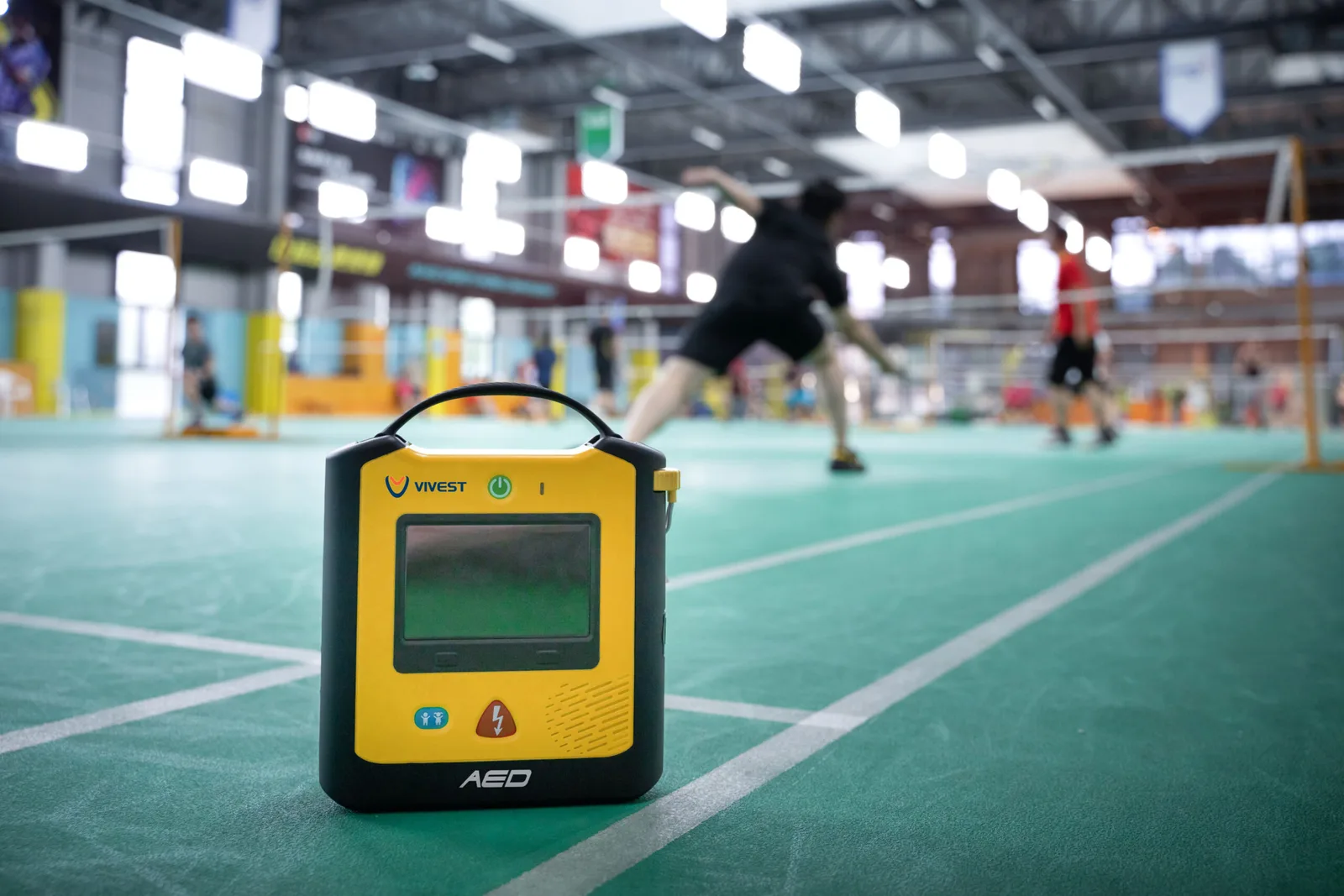
During a cardiac arrest, every minute without resuscitation lowers the chance of survival by roughly ten percent. We explain how the links of the chain of survival save lives together.
Sudden cardiac arrest chooses neither time nor place. When it happens, every second counts. Experts talk about the chain of survival, a sequence of actions that together decide whether a person will survive.
Every minute counts
With every minute without resuscitation and defibrillation, the chance of survival drops by roughly ten percent. Emergency medical responders often need several minutes to reach the scene. It is exactly this gap that bystanders and a publicly accessible defibrillator bridge.
The links of the chain
The chain of survival connects four key steps. First, early recognition of the arrest and a call to 112, then immediate chest compressions, defibrillation with an AED as soon as possible, and finally professional care from the responders. A weak link weakens the entire chain.
Why an AED is so important
A defibrillator analyses the heart rhythm and, if needed, delivers an electric shock that allows the heart to restore normal function. Modern devices are designed so that even a lay person can use them safely, because they deliver a shock only when it is truly needed.
What you can do today
Make sure that a defibrillator in your environment is accessible and properly marked, that it is technically sound, and that staff know where it is and how to use it. A short training session can one day mean the difference between life and death.